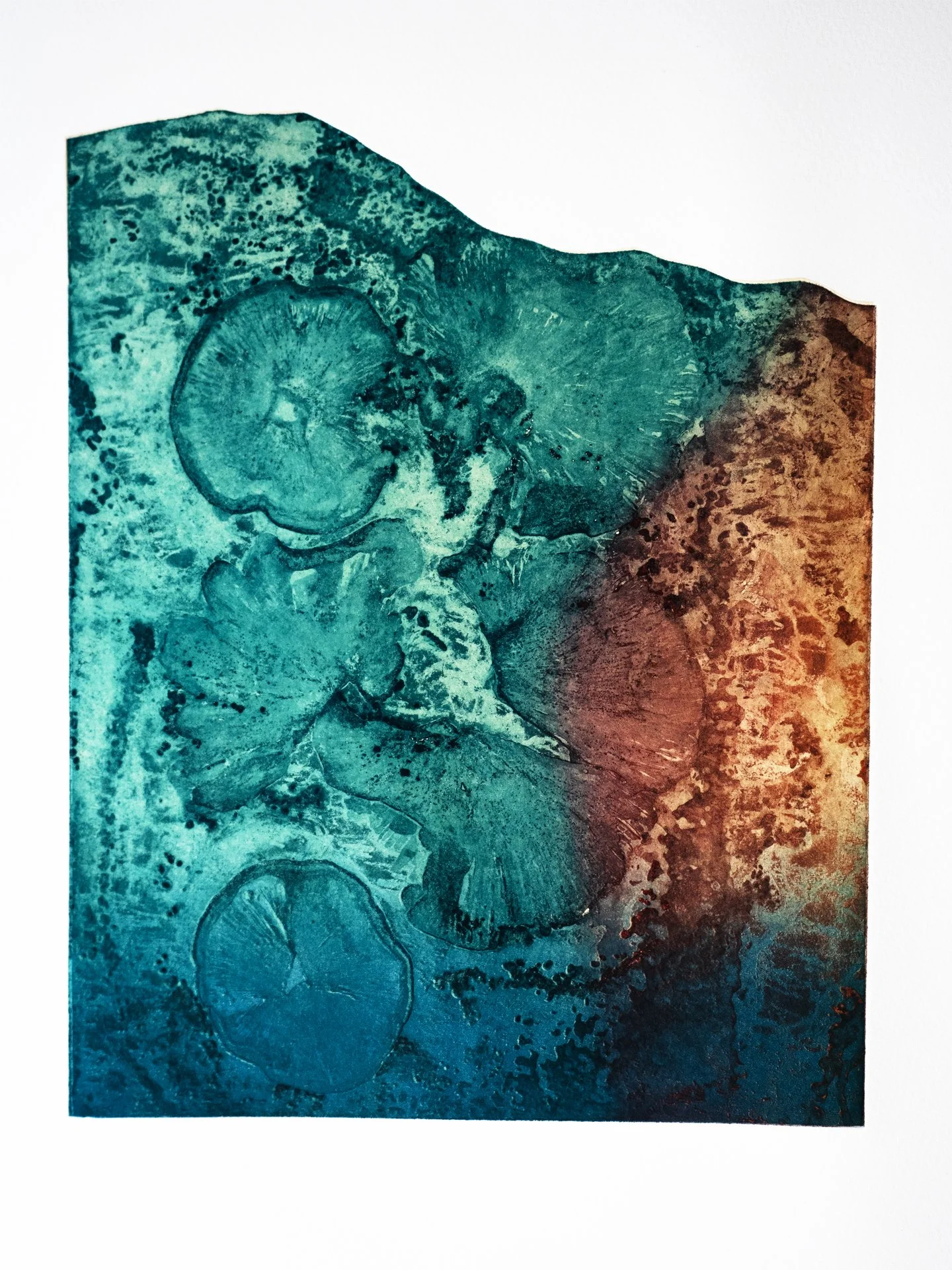
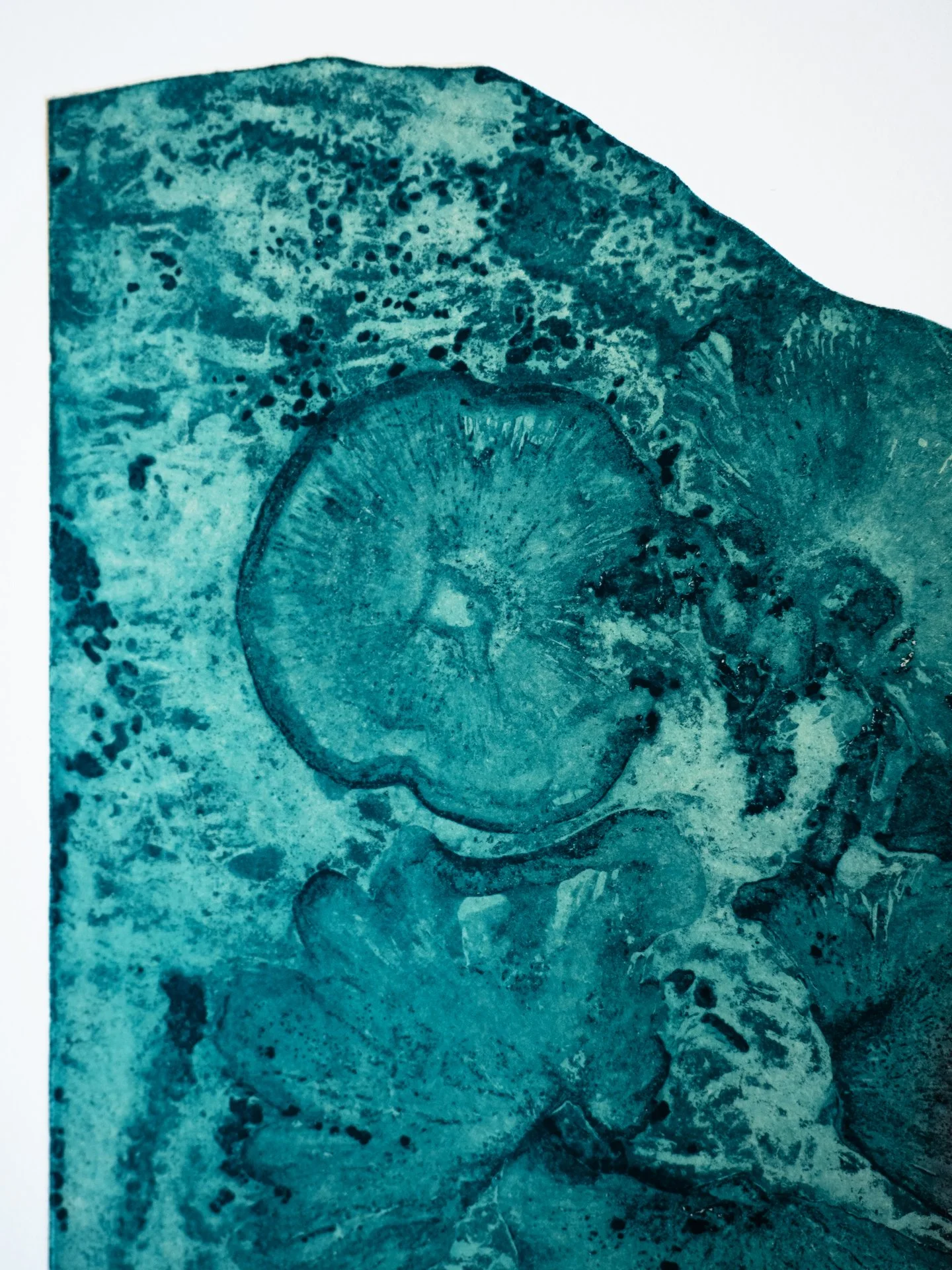
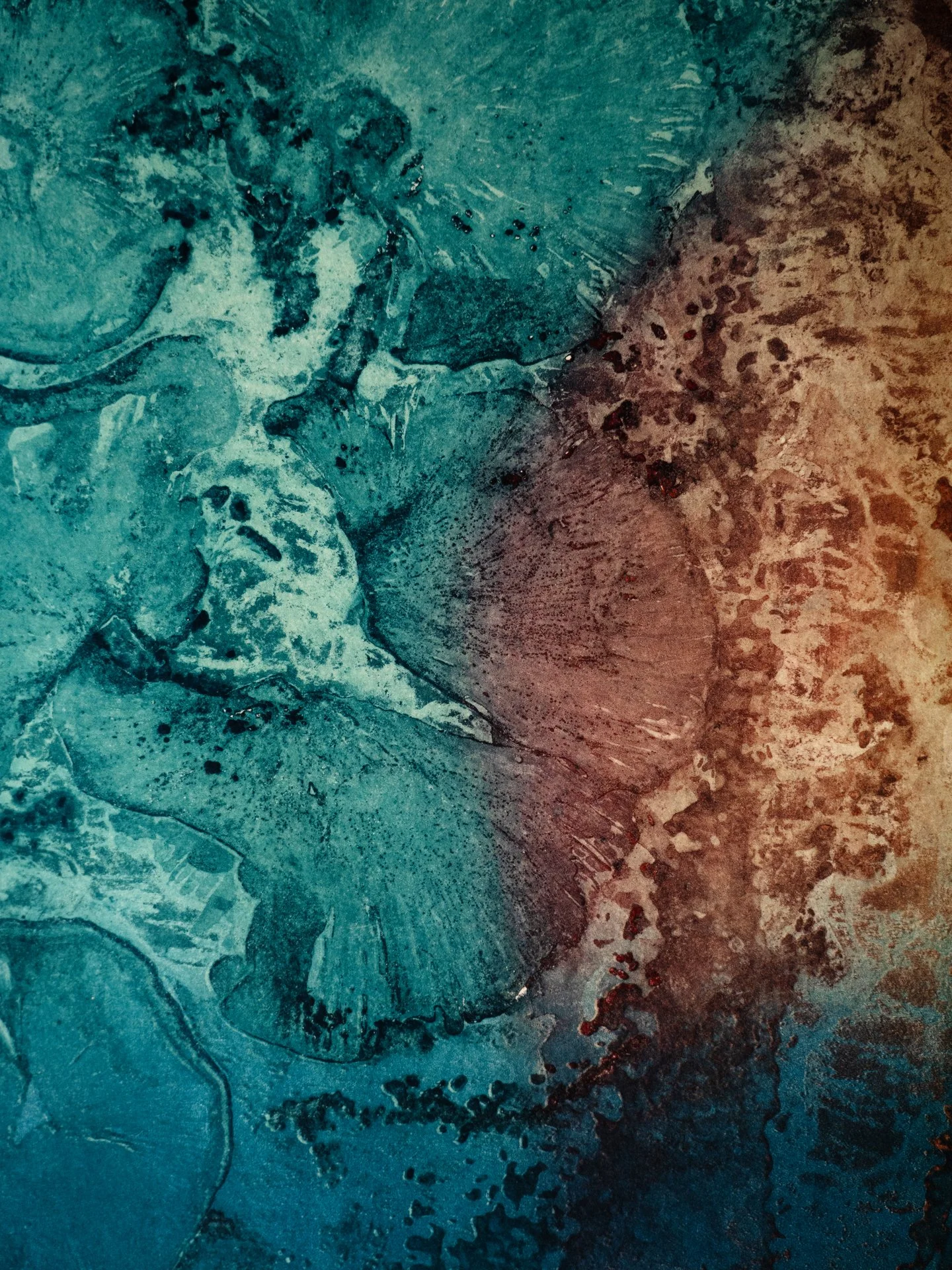
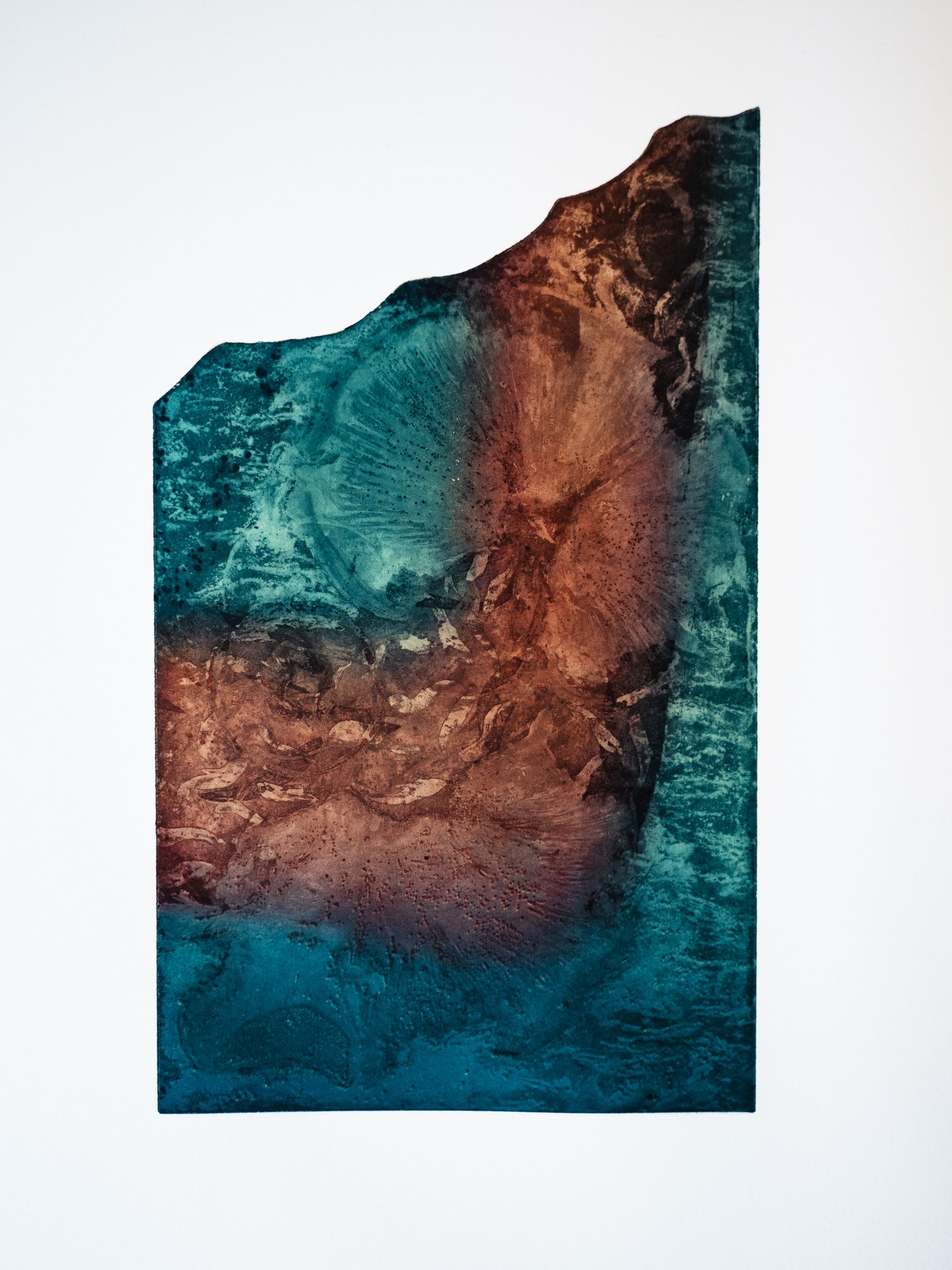
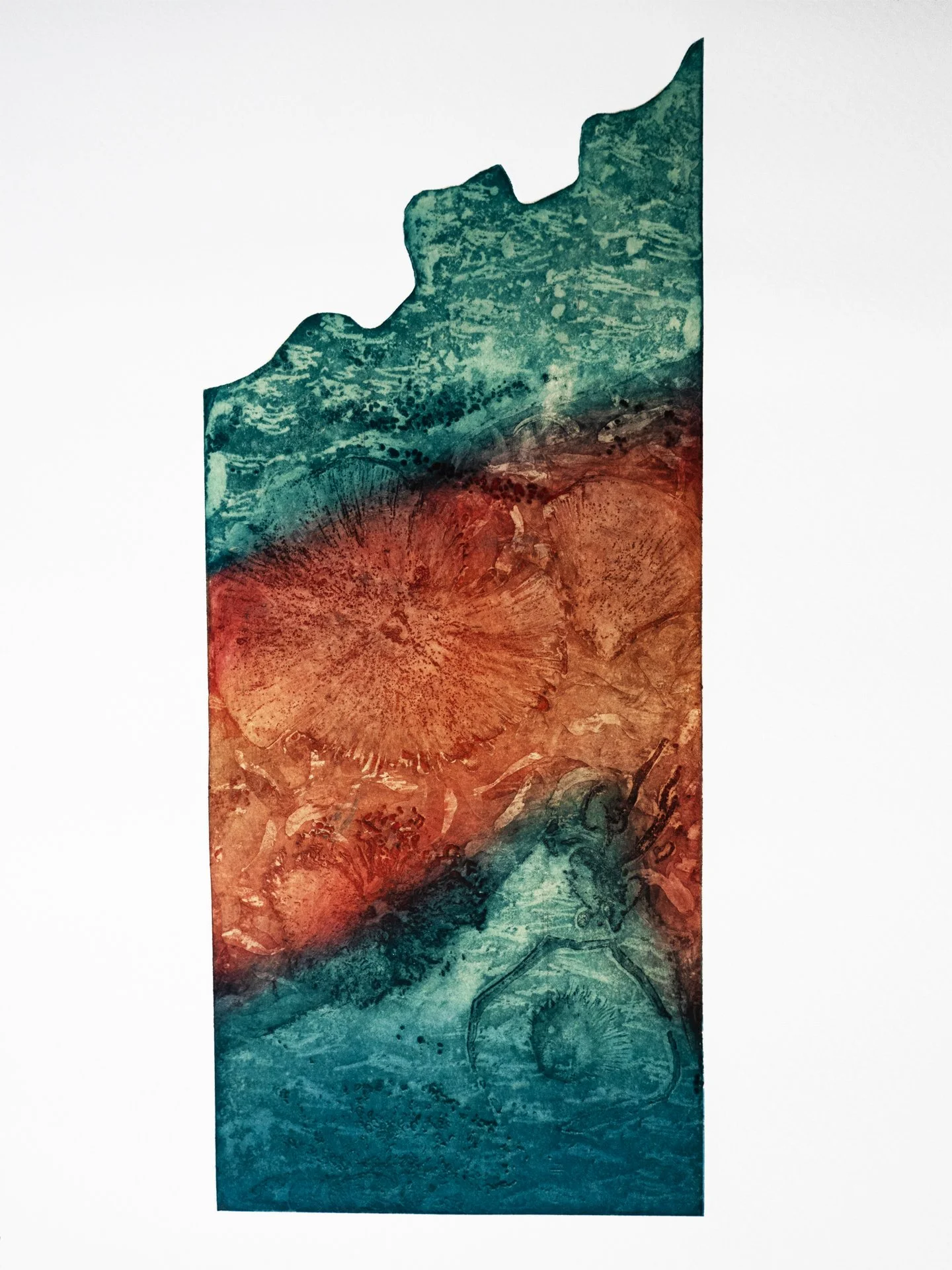
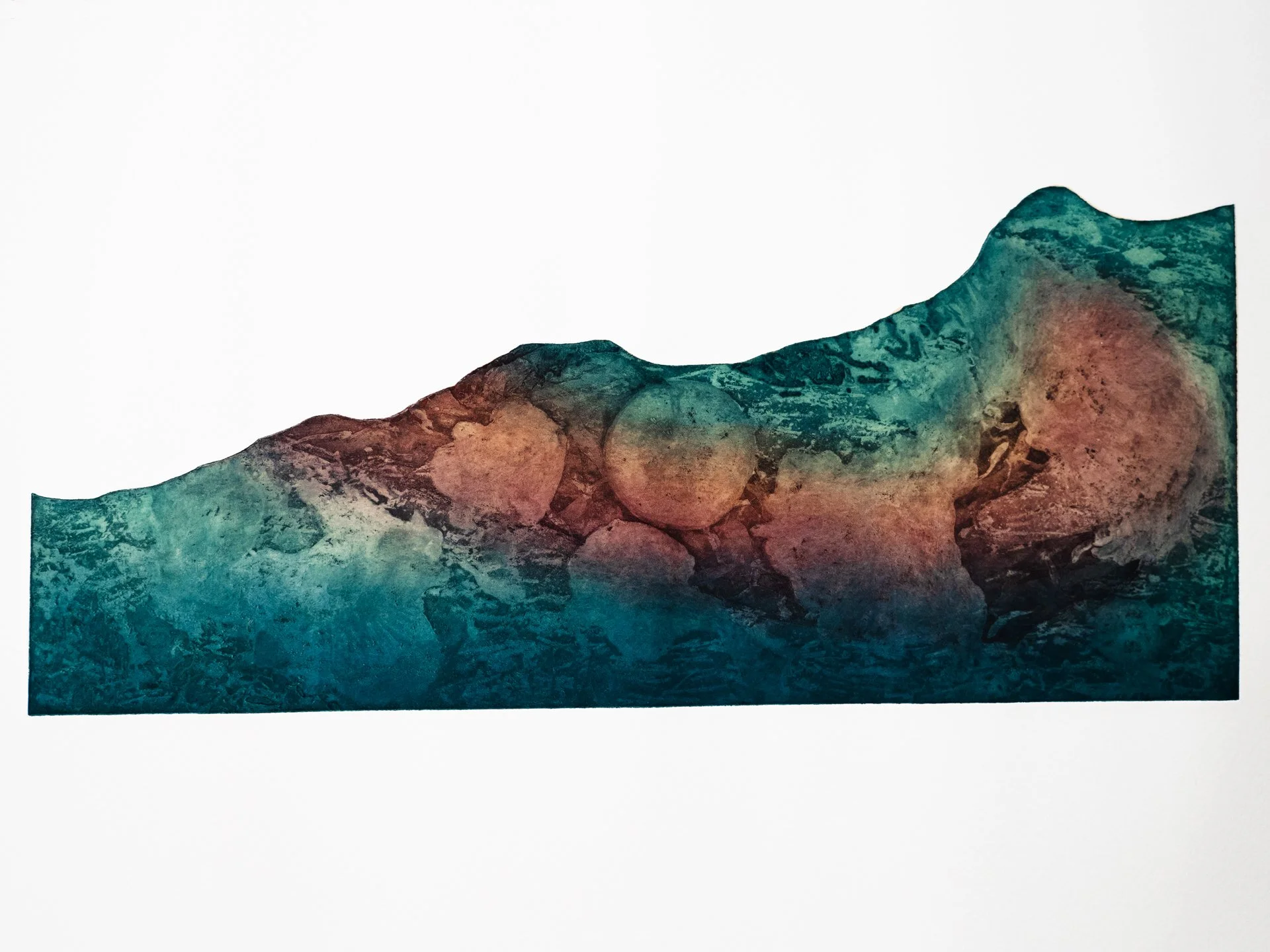
I am inquiring on how we can learn from ecological adaptations to trauma in the land as a means to better understand methods of healing from human-lived trauma, seeking connections between transformed ecosystems and neuroplasticity. I’m interested in the material understanding of water as a collaborator in creating the works exhibited. The “Look Below” series works with mushrooms and electrolysis etching, with foraged mushrooms carrying the electrical current between two copper plates and etching their impressions into one plate (the anode) while transferring copper particles to the other (the cathode). The Maine-native fish, the alewives, appear in the suite of etchings as returning figures that transfer nutrients between salt water and fresh water through an upstream migration, embodying the porous nature of organisms in reviving ecosystems.
Look Below I 2023 Electro-etching (semi-dry method with organic material) with chine collé 14.75" x 12" (37.5cm x 30.5cm)
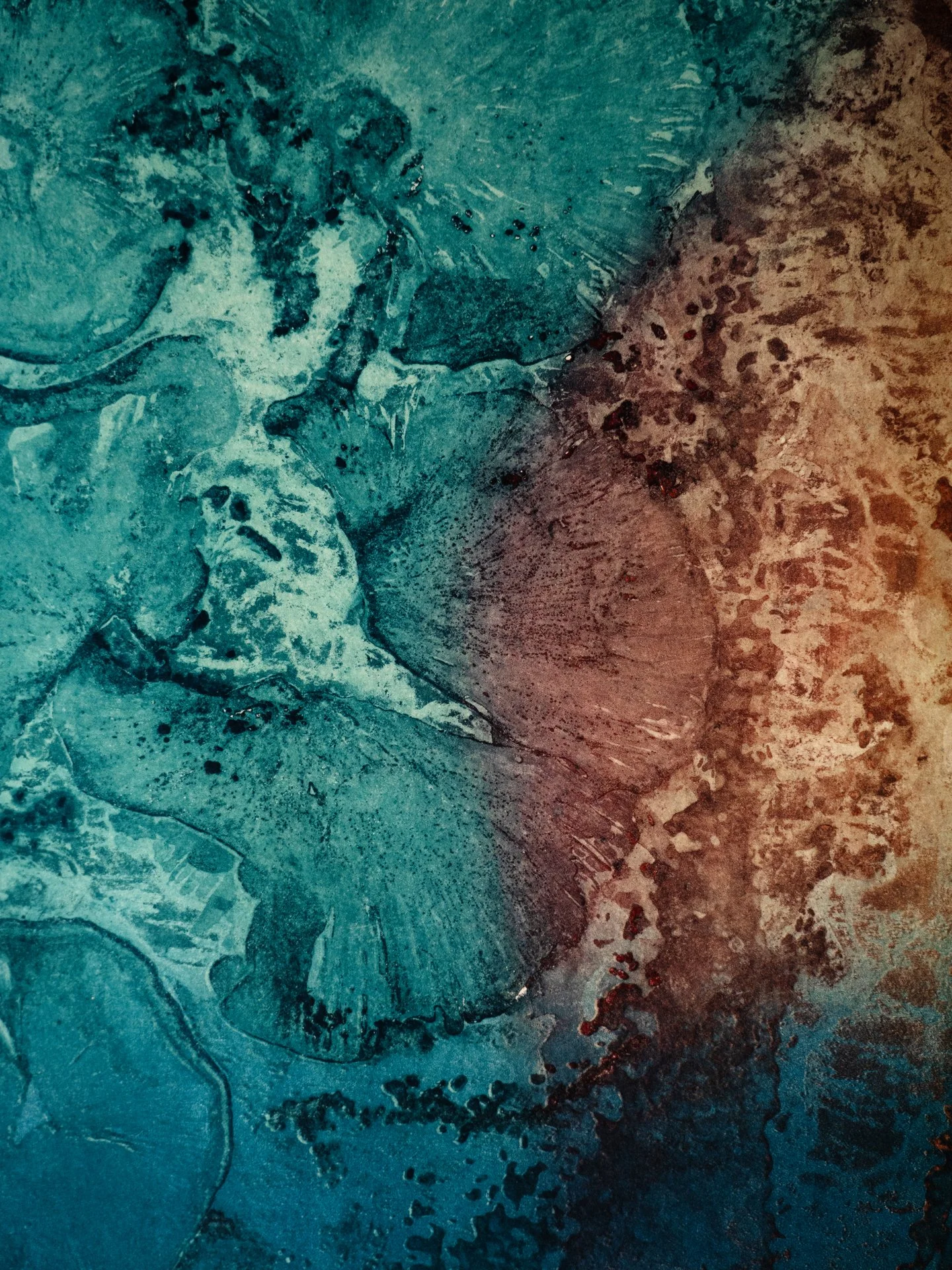
Look Below II 2023 Electro-etching (semi-dry method with organic material) with chine collé 13.5" x 9.5" (34.3cm x 24cm)
Look Below III 2023 Electro-etching (semi-dry method with organic material) with chine collé 17.5" x 9. 5" (44.5cm x 24cm)
Look Below IV 2023 Electro-etching (semi-dry method with organic material) with chine collé 11" x 18.75" (28cm x 47.6cm)
Quisque iaculis facilisis lacinia. Mauris euismod pellentesque tellus sit amet mollis.